
By Dr Siân Burwood MA VetMB MRCVS – Small Animal GP and Veterinary Writer
We are all aware of rising summer temperatures over the last few years, and 2026 has already broken multiple records. With this trend unlikely to reverse and our pets unable to strip out of their furry coats, it is vital as caregivers that we understand how this hot weather affects our animals, and how we can manage it to keep them safe.
How do dogs and cats stay cool?
As humans, we control our body heat in hot weather through sweating. Sweat glands exist all over our bodies, and as sweat evaporates off our skin, it takes heat away with it.
Dogs and cats do not have sweat glands anywhere on their bodies except on the underside of their paws, so this is a far less efficient way to lose heat. Dogs mainly lose excess heat by panting, where rapid open mouth breathing draws cooler air into the body and releases heat on the exhale.
Cats are different still; although they will sometimes pant in extreme heat, this should never be for more than a few seconds, and any sustained panting can be a sign of severe breathing difficulty. Cats will try to stay cool by seeking out cold surfaces to lie on, by grooming to encourage evaporation off the coat and by reducing activity during the hottest parts of the day.
Both species will drink more water in hot weather to make up for the losses through panting and grooming.
Why are heatwaves so dangerous for dogs and cats?
Heatwaves (periods of sustained high temperatures) are dangerous for dogs and cats fundamentally because of their limited options to control their own temperature in the environments we keep them in. They cannot take off their fur coat, they may well not be allowed out overnight when the temperature is cooler, and they are certainly not able to purchase their own fans and air conditioning. Lack of awareness around the additional risks of hot weather to pets (and especially senior pets who have existing health conditions) causes untold numbers of premature deaths and euthanasias for UK pets each year.
Along with a furry coat they cannot take off, the UK pet population is currently facing an obesity crisis, with the latest PDSA Paw Report suggesting 46% of dogs are classed as overweight by their vets. Being overweight acts as another layer of insulation that prevents effective heat loss, and is usually associated with poor levels of fitness which makes them less able to pant.
Breed considerations
The breed of your pet is especially important to bear in mind in hot weather.
Huskies, Malamutes, Chows, Newfoundlands and other double coated breeds that come from colder climates are designed to exist in snowbound environments without additional layers. They will start to feel the effects of hot weather at far lower temperatures than a small short haired breed from a warmer climate, such as a Chihuahua who originates from Mexico.
Brachycephalic breeds (flat faced breed such as Pugs, all Bulldogs, Pekingnese, Lhasa Apsos and Shih Tzus) already have a reduced ability to breathe due to narrowed nostrils and airways, and this means that panting is not as effective for them. They also start to struggle at much lower temperatures than you might expect, and overheat incredibly quickly.
Cats are a desert species and so usually cope better than dogs, but long haired breeds (such as Maine Coons) and brachycephalic breeds (such as Persians) suffer from the same issues as fluffy and flat faced dogs.
What problems can we see in hot weather?
- Heatstroke
Heatstroke (hyperthermia) is the uncontrolled rising of body temperature. Unlike a fever where the temperature is caused by the body itself, hyperthermia is where the rise in body heat happens faster than it can be lost. This can come on very suddenly and causes multi-organ failure and death if not treated quickly.
- Sunburn
Sunburn is not as much of a concern in pets as it is in humans (the one heat related thing where fur is good) but in thin furred areas and especially with white fur, it can still be a risk. This is especially true for cats with white ears, where UV rays from the sun make a certain type of skin cancer more likely. Sunburn can be prevented in these areas by using pet-specific suncreams.
- Paw burns
A very common presentation to vets during a heatwave is burns to the pads of the feet from walking on hot pavements or patios.
- Deterioration of heart and respiratory disease
A patient with heart or lung problems already has to work harder than usual to keep these organs going, and any increase in panting makes them have to work harder still. Many patients with chronic heart or lung disease will show deterioration during hot weather.
- Deterioration of skin disease
If your pet has allergic skin disease, the increase in body temperature makes itching feel worse and makes it more likely there will be bacterial overgrowth. This is also true for breeds that have excessive skin folds that can get very warm and moist.
- Deterioration of kidney disease
In kidney disease, the kidneys are not able to concentrate the urine effectively to save water in the body. This means these patients become dehydrated even more quickly than others, which in turn worsens their kidney function.
- Effect of osteoarthritis
Patients with sore and painful joints often suffer more than others in hot weather as they are less inclined to move around to find cooler areas. The muscular effort of increased panting will also make them tire quicker, and so worsen their immobility.
How can I keep my pet cool in hot weather?
Once temperatures get above 20?C/68?F you need to start thinking about actively managing heat for your pet. If you have a flat faced or fluffy breed, that figure is closer to 16?C/60?F, but it’s still worth remembering that overheating is possible at any temperature for some pets!
Things you can do to help include:
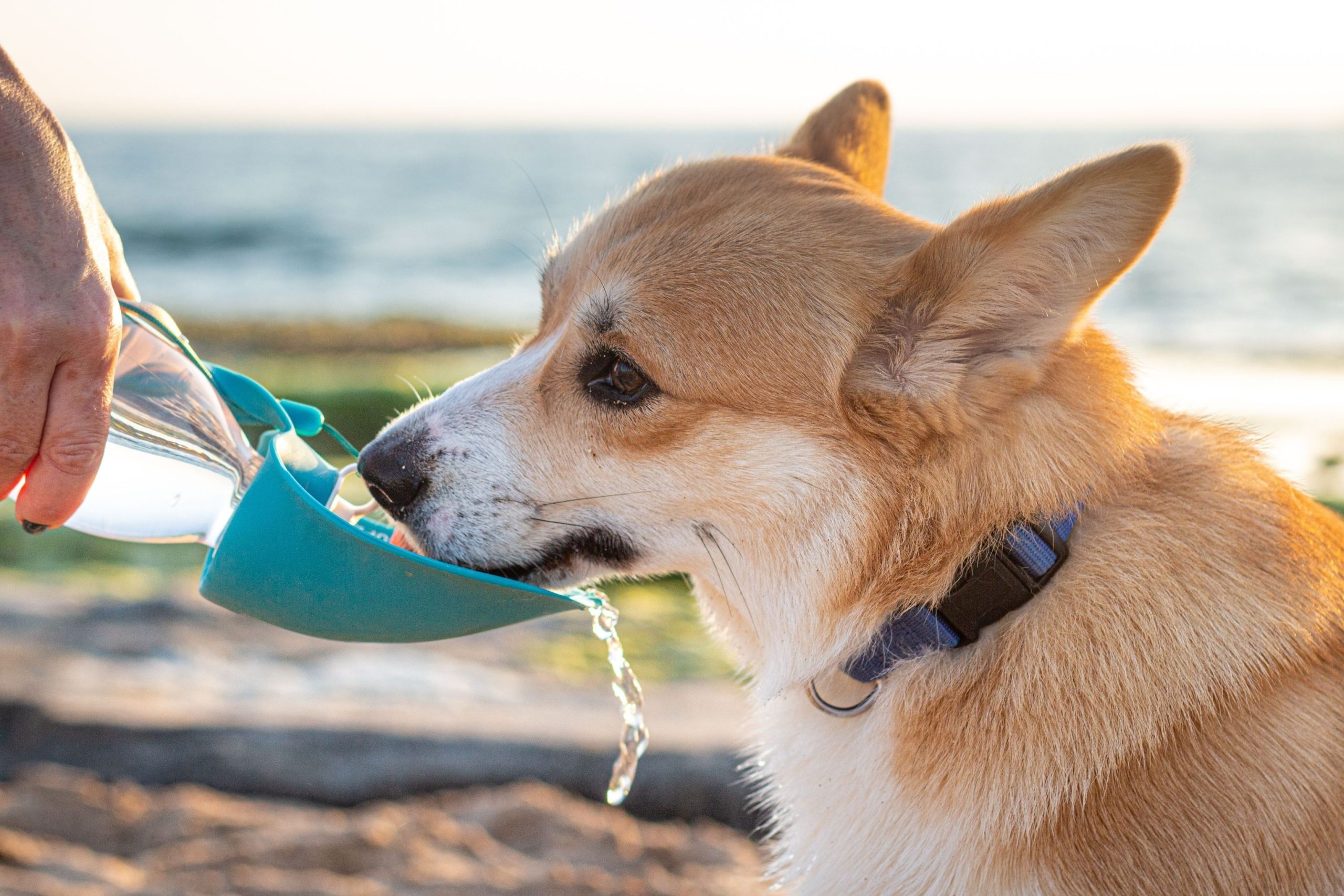
- Ensure there is access to clean fresh water at all times (including when you go out) and in multiple places around the home and garden. Drinking fountains can be bought quite inexpensively to encourage fluid intake. You can also add ice cubes to help keep the water cool.
- If in doubt, don’t take them out. Dogs should only be exercised in the early morning (before 7am) when temperatures are lower – even in the evening temperatures remain too high. No dog has ever died from not having a walk but many do from people thinking they still have to walk them on a warm day or at usual times. If you do go out, keep to shaded areas like woodland.
- If you are going out, take the pavement test – can you cope with placing your bare palm on the pavement and keeping it there for 5 seconds? If it’s too hot for you, then it’s too hot for your dog’s paws.
- Place fans near favourite resting spots.
- Make sure you keep on top of daily grooming to remove any dead fur that locks in heat.
- Cooling mats and bandanas can be useful, as can cooling jackets as long as they are used correctly.
- You can use a shallow paddling pool at home, which is much safer than open water. Not all dogs can instinctively swim. You can also hose your dog down, making sure they do not swallow large volumes.
For cats, make sure they can access cool shady areas. If you have a shed, greenhouse or summerhouse make sure a cat isn’t resting in there before closing it up – this can be as dangerous as leaving a dog in a car, where outside temperatures of just 22?C can reach 47?C within the car or shed very quickly.
Heatstroke – signs to look out for and how to manage it before you get to the vet
Heatstroke can come on very rapidly, and can happen inside or outside the home. Signs to look out for include:
- Panting
- Dribbling
- Red skin
- Gums turning purple, progressing to muddy brown
- Vomiting and diarrhoea
- Collapse
If you suspect your dog has heatstroke, IMMEDIATELY remove them from the source of heat (exercising, the car, the sun) and start actively cooling them down, ideally using running water poured over the body.
Call your vet as you are doing this and they will provide further information. It is vital to start cooling yourself as the body temperature will rise further as you travel to a vet.
Heatstroke can become fatal within minutes so rapid treatment has the best hope for survival.
Conclusion
The warm summer weather can mean opportunities for lots of fun, but we must remember that our animals find it harder to cope with, and especially our senior pets who may have existing medical issues.
By being sensible and actively trying to manage the heat for them, there is no reason why your pet should not enjoy summer too.
If you’d like to talk, ask questions, or just need support, we’re always here. Call us on 07942 077180 or email info@pawsovertherainbow.co.uk